Rives TED Talks - Part 1
2006 - Videos of the Early Internet 2.0

I love it when artists connect the internet's vastness to something deeply personal or vulnerable. The dichotomy starkly shows how the internet is just another way we try to reach one another, for better and worse. The move Didi does this. Phil Kaye's poems do this. Rives does this.
In all four of these talks, Rives captures some of this tension between the deeply personal and the highly online. He is delightfully optimistic and irreverent. There are lines where he gently calls us to be the best version of ourselves, to be excellent to each other.
This is the first post of this blog series called "Permanant Collection". I am cataloing the pieces of media that have stood the test of time, through different decades, interests, and life stages and continue to be meaningful or simple enjoyable to me. When I make these posts I am also downloading and archiving any related media so I can have it to revisit if the powers that be ever remove it from the internet.
The first two videos are from the 2006 TED 4-day event, where some other all-time great TED talks were given. If you are an educator, you have likely seen Ken Robinson's "Do Schools Kill Creativity?" during an in-service training. Al Gore, still relevant then, gave the talk "Averting the Climate Crisis."
TED Talks
TED created a cultural moment with the launch of their site, video podcast, and putting videos on the newly created YouTube. It feels like a somewhat forgotten, yet key, part of internet history. To say "I watched a TED Talk..." carried an appeal to authority. A 2012 New Yorker article described how stringent the conference leaders were in keeping quality and brand standards high:
TED’s eye for theatre, its vigilance about immersion and control, has become a key source of its appeal. Attendees are urged not to check their phones during the talks. Volunteers who want to organize a TEDx event receive a hundred-and-thirty-six-page manual detailing regulations and requirements ... Conferences that overstep major rules lose their TED license.
That same article talks about how these high standards and curation led to significant viral attention and reach. After Susan Cain gave her TED Talk, "The Power of Introverts":
She discovered that her name was the sixth-most-trending phrase on Twitter in the world. When her lecture later went up on TED.com, it received about half a million views in its first day.
This kind of virality became the blueprint future YouTubers and content companies tried to emulate.
The 2006 Videos
These two videos are a look at the early Internet 2.0.
We're talking peak 2006. I was ranking my friends on MySpace. Facebook had recently lost the "The". It had just started invite-only registration for the general public. The iPhone was only a rumor and hadn't been announced yet. Twitter had just launched and frequently showed the blue whale that meant the site was down. The Wii was released. The PlayStation 3 had just launched, solidifying Blu-Ray over HD DVD as the next-gen physical video format.
Google had just acquired YouTube, a key to TED's success.
These videos capture the spirit of 2006 in all of their 240p glory. I mean, take a look at the thumbnails. They capture the boundless optimism of what the internet could be.
If I Controlled the Internet
"Grandma.com would be a recipe for biscuits and spit-bath instructions."
I wish this were real and not just a boring placeholder site.
I feel like the weird, delightful parts of the internet peaked around this time and have slowly disappeared. Anecdotally, weird and personal online spaces are resurgent. It isn't uncommon on Bluesky to see a call to "make the internet weird again."
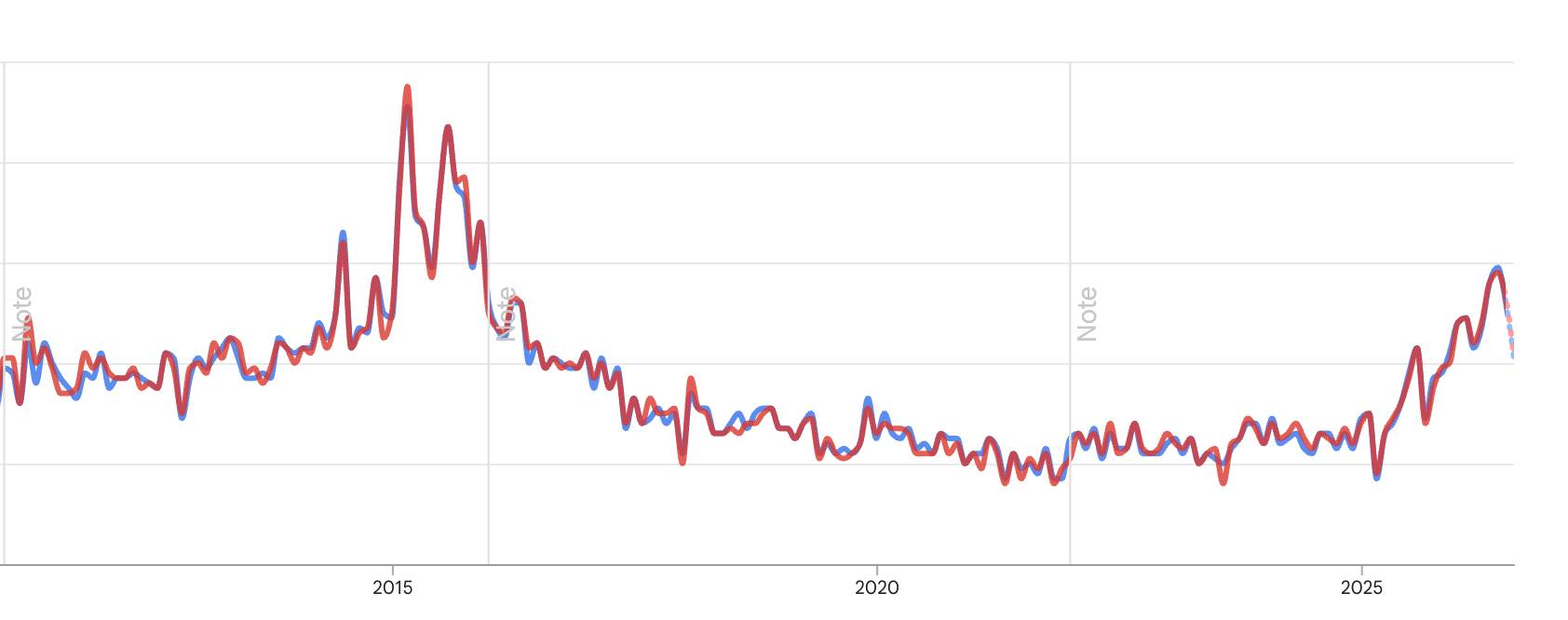
Google Trends backs this up. The following graph shows "weird internet" and "internet weird." The 2015 spike lines up with the rise of "Weird Twitter", and the current rise somewhat corroborates what I've been seeing.

"Heck, if I ran the Web, you could email dead people.
They would not email you back, but you'd get an automated reply.
Their name in your inbox. It's all you wanted anyway.
And a message saying, "Hey, it's me. I miss you.
Listen, you'll see being dead is dandy.
Now you go back to raising kids and waging peace and craving candy."
This is what I meant at the top of the post when I talk about loving the intersection of the internet's vastness with something deeply vulnerable. He weaves the absurd with the poignant in the same breath.
I love the phrase "waging peace".
"You could MapQuest your lovers' mood swings
You could navigate and understand every emotional intersection. Some days, I'm as shallow as a baking pan, but I still stretch miles in all directions"
I was struck by two things here:
- Mapquest. lol.
- This is an eerie portent of the current conversation about using AI for relationship advice, or as a "family chief of staff." At the time, this was a humorous illustration; right now it feels rather dystopian. Then and now, the internet is just another way we try to reach one another.
A Mockingbird Remix of TED2006
This is the conference's concluding talk. The middle of this piece references other talks from the weekend, thus the "Remix" in the title. This section includes lines from talks by Tony Robbins, Hans Rosling, and Rick Warren. But their talks aren't being inducted into the Permanent Collection.
Rives' are. Let's watch.
Lyricism
"Everybody asking, just who is responsible for this citywide, nationwide mockingbird cacophony, and somebody finally is going to tip the City Council of Monterey, California off to me, and they'll offer me a key to the city."
The internal assonance and rhyme here tickle my brain. It feels like a precursor to what works so well in so many of Lin-Manuel Miranda's Hamilton lyrics. It's technically brilliant while remaining totally accessible and conversational. You don't have to know why it works, but you know there is something catchy about these lines.
Mimus polyglottos
The first time a mockingbird copied me was on a hike in Maine. It was 2020, and my wife and I were on our honeymoon. It was humid and weirdly hot. Because of where we were and pandemic regulations, no one else was on the trail. It was weirdly quiet as the foliage absorbed most ambient sound. A melodious birdcall cut through that silence. I whistled a couple of notes, and almost immediately the bird responded with the same notes. For someone who grew up in a city, it was magical.

My wife and I grinned at each other. I told her it sounded just like in The Hunger Games. 😅 Then I told her about this video and recited my favorite line from it:
"Everybody gets heard. Everybody gets this one, honest mockingbird as a witness."
Everyone gets heard. For better and worse, the internet has democratized who has a voice. But the internet isn't the only place to be heard, to bear witness, to reach for each other. It's just one place.
I can't go around with loaded mockingbirds, but I can bear witness to those around me. To be honest with myself and with others. I do what I can to make sure everybody gets heard.
I am writing about two more of Rives' videos as a follow-up to this. They are a self-contained series that deserves its own post.
For now, though, let's welcome the first entry in the Permanent Collection.
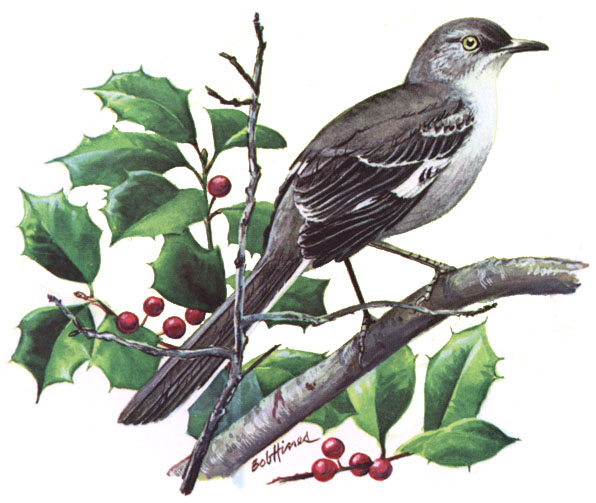
- Bob Hines, United States Fish and Wildlife Service. Public Domain. URL